
Recruiting Students in Liberia: Challenges, Lessons, and What’s Working
This topic was recently discussed on the Stars of Tomorrow Podcast, hosted by Heather Cannon and Kevin Nah, and featuring Kelvin Fomba, UDS Co-Founder and Director in Liberia. Together, they explored the realities of recruiting students into vocational training programs—and what it takes to create lasting impact.
Recruiting students into vocational training programs in Liberia is not simply about awareness—it’s about overcoming deep-rooted economic, social, and systemic challenges.
At Uniting Distant Stars (UDS), recruitment has evolved into a dynamic process shaped by real-world obstacles and innovative solutions.
Note to Readers: During this discussion, Kelvin encountered technical difficulties and was required to rejoin without video due to connectivity limitations in Liberia. Kevin also had to leave the conversation early due to a scheduling conflict. Despite these interruptions, we’ve preserved the key insights and conversations throughout this post.
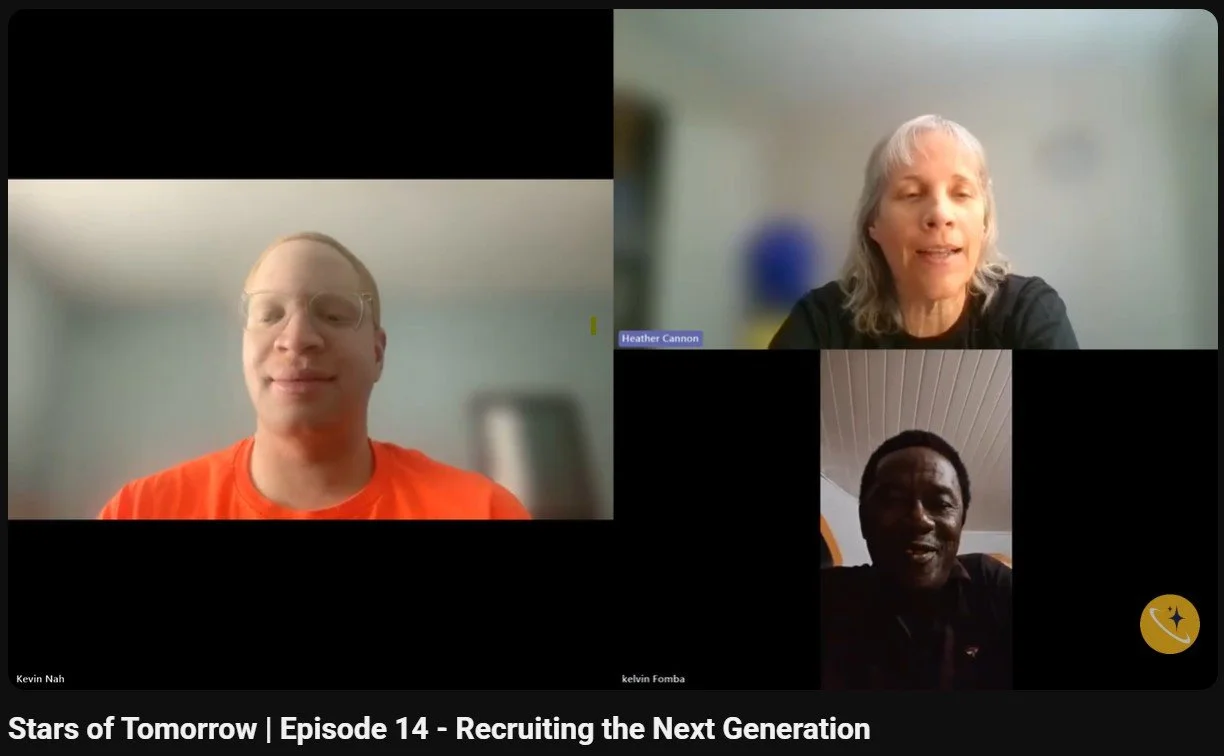
Clockwise from left: Kevin Nah (cohost & volunteer, Heather Cannon (cohost, US co-founder and executive director), and Kelvin Fomba (Liberia co-founder and director)
The Reality of Recruitment Challenges
1. The “Quick Money” Trap
One of the biggest obstacles is the rise of short-term income opportunities, such as motorcycle taxi driving. While appealing, these jobs offer immediate earnings but limited long-term growth.
Young people are often forced to choose between survival today and stability tomorrow. This creates a major barrier to committing to a one-year training program.
2. Economic Hardship & Lack of Support
Many students want to learn but cannot afford tuition or basic costs. Even with subsidized programs, financial pressure remains a deciding factor.
Without family or sponsor support, education becomes a luxury rather than an opportunity.
3. Social Challenges (Including Drug Use)
Communities are also facing increasing substance abuse issues among youth, which disrupts motivation, focus, and long-term planning.
These factors make recruitment not just about enrollment—but about rebuilding direction and purpose.
4. (Extra) Distrust of “Quick Impact” Programs
Short-term NGO or political training programs often promise skills but fail to deliver real outcomes.
As Kelvin shared, trainees sometimes receive tools they don’t know how to use—leading them to sell them instead.
This creates skepticism toward legitimate programs like UDS.
Strategies That Are Making an Impact
Despite these challenges, UDS is adapting with powerful, community-centered strategies:
1. Alumni-Led Recruitment
Graduates are the most effective ambassadors.
Instead of traditional marketing, UDS empowers alumni to:
Share real-life success stories
Showcase their work (photos/videos)
Engage directly within communities
This builds trust through proof, not promises.
2. Community Outreach + Radio Campaigns
UDS is returning to grassroots outreach—meeting people where they are:
Community visits
Radio interviews and jingles
Local visibility campaigns
The goal is repetition and consistency—not one-time exposure.
3. Expanded Scholarships (Access Strategy)
Recognizing financial barriers, UDS is increasing:
100% scholarships
Partial scholarships
Scholarships are now being used as a recruitment driver, helping attract motivated students who otherwise couldn’t enroll.
4. Flexible Scheduling
Students can continue earning income while training by:
Choosing their own schedule
Attending part-time sessions
This reduces the tradeoff between survival and education.
5. Digital & Social Engagement
New strategies include:
Facebook Lives with alumni
Online interviews
Social proof via student work
These approaches expand reach, especially among younger audiences.
Why This Matters
Recruitment isn’t just about filling seats—it’s about changing life trajectories.
UDS focuses on long-term skill development, not quick fixes. Their approach ensures:
Students can actually perform jobs
Graduates gain employment or start businesses
Communities benefit from skilled labor
As Heather emphasized: “We want people who can do the work—not bluff.”
Final Takeaway
The biggest lesson?
👉 Sustainable impact requires time, trust, and real skill-building
By focusing on long-term outcomes, UDS is not just recruiting students—they are rebuilding opportunity pathways for an entire generation.
Watch the full podcast here: